
Le Roi du Patrimoine
Erfgoed en zijn bescherming.
Beschermde monumenten en hun status in Europa
Ontdek de collectie- 73Plaatsen in de collectie
Hautefort, Dordogne — Jebulon · Wikimedia Commons · CC0
De collectie
Le Roi du Patrimoine
Erfgoed dat geen kasteel, tuin, dorp of domein is: abdijen, bruggen, molens, vuurtorens.

Abbatiale Saint-Volusien de Foix
Saint-Volusien is the former abbey church on Place Saint-Volusien in Foix. The French monument register records construction in the twelfth, fourteenth and seventeenth centuries, with campaigns dated 1125 and 1613. The city records that the church was rebuilt over earlier Romanesque remains after destruction in the Wars of Religion. The church was listed as a historic monument in 1964.
Editorial selectionCC BY-SA 3.0

Abbatiale Sainte-Foy de Conques
Conques · Occitanie
The abbey church of Sainte-Foy stands at the centre of Conques, in Aveyron. Built during the eleventh and twelfth centuries, it is a major surviving example of southern French Romanesque architecture. Its west doorway carries a Last Judgement carved with 124 figures. The interior contains sculpted capitals on two levels, including upper galleries, and contemporary stained glass by Pierre Soulages. The church is a component of the Routes of Santiago de Compostela in France, inscribed by UNESCO in 1998; this designation should not be confused with a separate inscription for the entire village. The treasury preserves medieval goldsmiths’ work associated with the cult of Sainte Foy. The tourist office’s information checked on 11 October 2026 announces that the treasury is closed until further notice for security reasons. The church and treasury are therefore distinct parts of a visit, with different access arrangements.
Editorial selectionCC BY-SA 3.0

Abbaye de Cluny
Cluny Abbey is a former Benedictine monastery in Saône-et-Loire, founded in 910 according to the Centre des monuments nationaux. The south arm of the great transept and the Eau Bénite bell tower survive from the great abbey church. The former abbey is recorded in Mérimée under PA00113220. The map uses the IGN abbey point.
Editorial selectionCC BY-SA 2.0

Abbaye de Fontenay
Marmagne · Bourgogne-Franche-Comté
Fontenay stands in the commune of Marmagne, near Montbard in Côte-d’Or, Burgundy. Bernard of Clairvaux founded the abbey in the early twelfth century: the abbey’s own history gives 1118, while UNESCO records 1119. Its church was built between 1139 and 1147 and consecrated by Pope Eugene III. The Romanesque church, cloister, chapter house, dormitory and forge preserve different aspects of a Cistercian community organised around worship and manual work. The late-twelfth-century forge is an important surviving witness to the order’s industrial activities. The site also records change and loss: the medieval refectory was demolished in 1745. After the monks left during the French Revolution, Fontenay became a paper mill in 1791. Élie de Montgolfier acquired it in 1820. Édouard Aynard bought the property in 1906 and began a major restoration, removing industrial additions; the campaign continued until 1911. Fontenay remains privately owned and is open to visitors. The abbey was inscribed on UNESCO’s World Heritage List in 1981 under criterion (iv), recognising the significance of its monastic architecture and organisation. The wooded valley and watercourses are part of the setting that makes the complex legible. The operator’s visitor route includes the principal monastic buildings, gardens and a stone museum.
Editorial selectionCC BY-SA 4.0

Abbaye de Jumièges
The former Benedictine abbey at Jumièges lies beside a bend of the Seine in Normandy. Its Notre-Dame church was dedicated in 1067. The French heritage register records separate protection for surviving buildings in 1918, nearby land in 1921 and the abbey with its adjoining park in 1947. The map marker is the IGN point for the former abbey.
Editorial selectionCC BY-SA 4.0

Abbaye de Saint-Père, Melun
The former Benedictine abbey of Saint-Père in Melun occupied the site of today’s departmental offices. A seventeenth-century cloister gallery survives. The French heritage register identifies the protected façades, arcades and roofs around the cloister.
Editorial selectionPublic domain

Abbaye de Saint-Savin-sur-Gartempe
Saint-Savin · Nouvelle-Aquitaine
Saint-Savin-sur-Gartempe lies in the Vienne department of Nouvelle-Aquitaine. Its abbey has Carolingian origins, while the surviving church was rebuilt in the eleventh century. The principal distinction is its extensive mural decoration, executed in the late eleventh or early twelfth century. Biblical scenes extend across the nave’s barrel vault and other parts of the building, making painting integral to its architecture. UNESCO recognises both the artistic achievement and the evidence these images provide for medieval teaching and religious thought. The site entered the World Heritage List in 1983. The Gothic spire dates from the fourteenth century and was reconstructed in the nineteenth; adjoining monastic buildings were rebuilt in the seventeenth century after destruction during the religious wars. The present ensemble therefore combines Romanesque painting and structure with later additions and restoration.
Editorial selectionCC BY-SA 3.0

Abbaye du Mont-Saint-Michel
Le Mont-Saint-Michel · Normandie
The abbey crowns Mont-Saint-Michel on the Normandy coast. Benedictine monks were installed in 966, and construction of the Romanesque church is traditionally dated from 1023. Building on the summit and slopes required an arrangement of supporting rooms, passages and terraces at different levels. Later campaigns added Gothic architecture, including the complex known as La Merveille. After the Romanesque choir collapsed in 1421, its replacement was completed in the flamboyant Gothic style. The abbey subsequently served as a prison; that institution closed in 1863. Historic-monument protection followed in 1874 and sustained restoration shaped the building seen today. Mont-Saint-Michel and its Bay entered UNESCO’s World Heritage List in 1979. The abbey is managed for visitors by the Centre des monuments nationaux, alongside a continuing religious presence. The abbey monument, the surrounding settlement and the tidal bay are related but distinct places.
Editorial selectionCC BY-SA 4.0

Abbaye Notre-Dame de Sénanque
The Cistercian abbey of Notre-Dame de Sénanque was founded in 1148 in a valley near Gordes. The French heritage register identifies building phases from the twelfth and nineteenth centuries and records partial protection as a historic monument. The abbey’s own history identifies the ground before the façade as the site of the medieval monks’ cemetery.
Editorial selectionCC BY-SA 4.0

Abbaye Royale de Fontevraud
Fontevraud-l’Abbaye · Pays de la Loire
Robert d’Arbrissel established a community of men and women at Fontevraud in 1101. An abbess governed the institution, which developed into a substantial monastic settlement under powerful patrons. The abbey church preserves the recumbent effigies of Eleanor of Aquitaine, Henry II and Richard the Lionheart, recording its close association with the Plantagenets. Other spaces include the cloister and the distinctive Romanesque kitchens. Religious life was interrupted by the French Revolution, and the complex was subsequently converted to a central prison, opened in 1814. That reuse altered the buildings as well as their purpose. Today Fontevraud is devoted to cultural activity, exhibitions and the presentation of its architectural heritage. It lies within the Loire Valley World Heritage property, inscribed in 2000; that is different from an individual UNESCO inscription for the abbey alone.
Editorial selectionCC BY-SA 4.0

Abbaye Saint-Philibert de Tournus
The former abbey of Saint-Philibert in Tournus includes its Romanesque church and surviving monastic buildings. Mérimée record PA00113488 dates the church to the eleventh and twelfth centuries and records protection for the church from 1840. The protection record also identifies the chapter house, refectory and cellars. The map uses the IGN abbey point.
Editorial selectionCC BY 4.0

Abbaye Saint-Pierre-aux-Liens de Joncels
Saint-Pierre-aux-Liens is a former Benedictine abbey at Joncels in the Hérault. The church, chapter house and part of the cloister survive, with building work from the Middle Ages and later centuries.
Editorial selectionCC BY-SA 4.0

Abbazia di San Bartolo
The former abbey of San Bartolo stands outside Ferrara’s walls. Its church, San Bartolomeo fuori le mura, survives within a monastic complex whose later history includes institutional care. The map pin identifies the former abbey site.
Editorial selectionCC BY-SA 4.0

Abbey of Santo Domingo de Silos
Santo Domingo de Silos has a Romanesque cloister at the centre of its monastic life. A medieval room houses museum objects preserved through nineteenth-century confiscation. Its library was created and maintained by the monks and has a history exceeding a thousand years.
Editorial selectionCC BY 3.0

Admont Abbey
Admont is a Benedictine monastery founded in 1074. Its community describes religious life, education, culture and economic activity among its continuing concerns. The institution also includes a museum complex and a monastic library.
Editorial selectionCC BY-SA 3.0

Alexander Nevsky Cathedral, Paris
The Alexander Nevsky church in Paris was designed by Kouzmine, with Strohm overseeing the building work. It was built in white dressed stone in a Russo-Byzantine style. Its foundation stone was laid on 3 March 1859, and construction was completed in August 1861.
Editorial selectionCC BY-SA 3.0

Augustiner Bräu Kloster Mülln
Augustiner Bräu Kloster Mülln in Salzburg grew from a brewery authorised for the Augustinian hermits in 1621. The present brewery and public Bräustübl stand beside the former convent and parish church in Mülln.
Editorial selectionCC BY-SA 4.0

Augustinerkloster Bad Langensalza
The former Augustinian friary in Bad Langensalza, Thuringia, was founded in 1280. Part of its east wing survives, and the buildings at Augustinerplatz now house the town museum. The former church tower forms part of the museum visit when access is available.
Editorial selectionCC BY 3.0
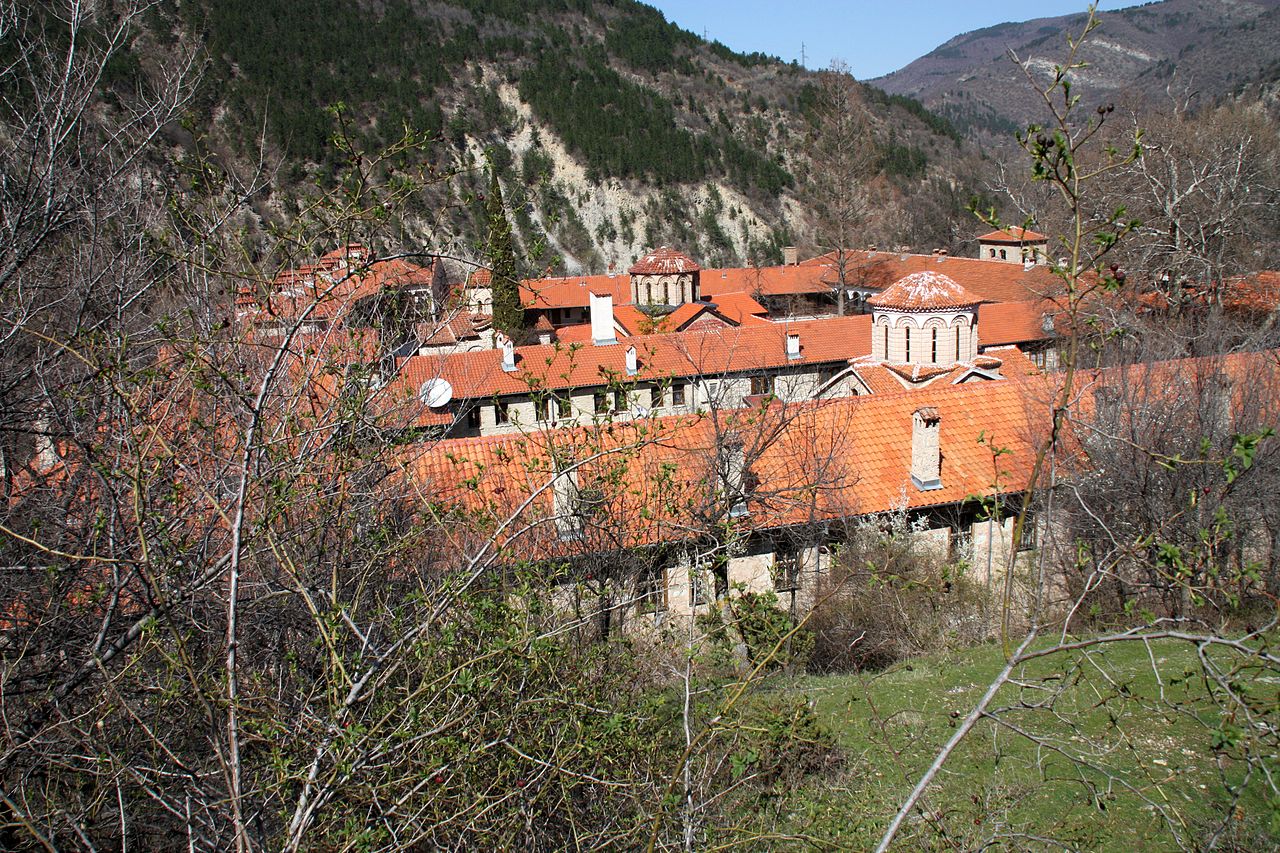
Bachkovo Monastery
Bachkovo Monastery has its own museum of liturgical objects and church art. Among its holdings is a silver paten whose inscription records a gift in 1644 by Theodosios of Peshtera, made by the Chiprovtsi craftsman Petar. Most manuscripts from the former monastic library are now held by the Bulgarian Orthodox Church’s historical and archival institute.
Editorial selectionCC BY 2.0 de

Belgrade Fortress
Belgrade Fortress stands above the confluence of the Sava and Danube. Belgrade’s heritage institute records the fortress as a cultural monument of exceptional importance. The fortifications of the Upper and Lower Town form a wider protected complex with Kalemegdan Park. The map pin marks the Inner Stambol Gate.
Editorial selectionCC BY-SA 4.0

Biertan fortified church
Biertan’s fortified church brings a hall church and three defensive enclosures together on a hill within the settlement. The Fortified Churches Foundation describes the towerless, three-aisled building as a work of around 1500. The county’s account also identifies a late Gothic hall church and a covered stair approach. Biertan and its fortified church entered the World Heritage List in 1993. The Committee approved the wider Transylvanian extension in 1999. That inscription history connects this monument to a larger serial property without making the whole series, the municipality and the church complex one interchangeable identity. The map locates the fortified church complex using Romania’s archaeological register.
Editorial selectionCC BY-SA 3.0

Butrint
The ancient city of Butrint lies on a low hill beside Lake Butrint and the Vivari Channel in southern Albania. The archaeological remains include a theatre adapted in Roman times, baths and early Christian buildings such as the baptistery and the Great Basilica. The map uses the UNESCO property reference point to locate the ancient city within the wider protected landscape.
Editorial selectionCC BY-SA 4.0

Carnuntum
Carnuntum’s visitor landscape includes a reconstructed Roman Quarter at Petronell-Carnuntum and the separately located Museum Carnuntinum in Bad Deutsch-Altenburg. The quarter’s operator describes rebuilding on the original site using archaeological findings and historic craft techniques. The resulting buildings interpret an early-fourth-century setting; they should not be presented as intact ancient houses. The museum is another historical layer. Opened in 1904, its building was designed by Friedrich Ohmann and August Kirstein in a historicist idiom drawing on Roman provincial architecture. Its displays bring archaeological finds into a purpose-built museum setting, while the quarter uses reconstructed rooms and spaces to interpret a former urban environment. The map uses the visitor point for the Roman City Quarter at Hauptstraße 1A in Petronell-Carnuntum.
Editorial selectionCC BY-SA 4.0

Cathedral of St. Elizabeth
Saint Elizabeth’s Cathedral stands on Hlavná Street in central Košice and serves the city’s archdiocese. Construction began in the fourteenth century and continued for more than 130 years. Its main altar contains forty-eight Gothic paintings.
Editorial selectionCC BY 2.5