
Le Roi du Patrimoine
Heritage and its protection.
Protected monuments and their status across Europe
Discover the collection- 54Places in the collection
Hautefort, Dordogne — Jebulon · Wikimedia Commons · CC0
The collection
Le Roi du Patrimoine
Heritage that is neither castle, garden, village nor estate: abbeys, bridges, mills, lighthouses.

Abbatiale Sainte-Foy de Conques
Conques · Occitanie
The abbey church of Sainte-Foy stands at the centre of Conques, in Aveyron. Built during the eleventh and twelfth centuries, it is a major surviving example of southern French Romanesque architecture. Its west doorway carries a Last Judgement carved with 124 figures. The interior contains sculpted capitals on two levels, including upper galleries, and contemporary stained glass by Pierre Soulages. The church is a component of the Routes of Santiago de Compostela in France, inscribed by UNESCO in 1998; this designation should not be confused with a separate inscription for the entire village. The treasury preserves medieval goldsmiths’ work associated with the cult of Sainte Foy. The tourist office’s information checked on 11 October 2026 announces that the treasury is closed until further notice for security reasons. The church and treasury are therefore distinct parts of a visit, with different access arrangements.
Editorial selectionCC BY-SA 3.0

Abbaye de Fontenay
Marmagne · Bourgogne-Franche-Comté
Fontenay stands in the commune of Marmagne, near Montbard in Côte-d’Or, Burgundy. Bernard of Clairvaux founded the abbey in the early twelfth century: the abbey’s own history gives 1118, while UNESCO records 1119. Its church was built between 1139 and 1147 and consecrated by Pope Eugene III. The Romanesque church, cloister, chapter house, dormitory and forge preserve different aspects of a Cistercian community organised around worship and manual work. The late-twelfth-century forge is an important surviving witness to the order’s industrial activities. The site also records change and loss: the medieval refectory was demolished in 1745. After the monks left during the French Revolution, Fontenay became a paper mill in 1791. Élie de Montgolfier acquired it in 1820. Édouard Aynard bought the property in 1906 and began a major restoration, removing industrial additions; the campaign continued until 1911. Fontenay remains privately owned and is open to visitors. The abbey was inscribed on UNESCO’s World Heritage List in 1981 under criterion (iv), recognising the significance of its monastic architecture and organisation. The wooded valley and watercourses are part of the setting that makes the complex legible. The operator’s visitor route includes the principal monastic buildings, gardens and a stone museum.
Editorial selectionCC BY-SA 4.0

Abbaye de Saint-Savin-sur-Gartempe
Saint-Savin · Nouvelle-Aquitaine
Saint-Savin-sur-Gartempe lies in the Vienne department of Nouvelle-Aquitaine. Its abbey has Carolingian origins, while the surviving church was rebuilt in the eleventh century. The principal distinction is its extensive mural decoration, executed in the late eleventh or early twelfth century. Biblical scenes extend across the nave’s barrel vault and other parts of the building, making painting integral to its architecture. UNESCO recognises both the artistic achievement and the evidence these images provide for medieval teaching and religious thought. The site entered the World Heritage List in 1983. The Gothic spire dates from the fourteenth century and was reconstructed in the nineteenth; adjoining monastic buildings were rebuilt in the seventeenth century after destruction during the religious wars. The present ensemble therefore combines Romanesque painting and structure with later additions and restoration.
Editorial selectionCC BY-SA 3.0

Abbaye du Mont-Saint-Michel
Le Mont-Saint-Michel · Normandie
The abbey crowns Mont-Saint-Michel on the Normandy coast. Benedictine monks were installed in 966, and construction of the Romanesque church is traditionally dated from 1023. Building on the summit and slopes required an arrangement of supporting rooms, passages and terraces at different levels. Later campaigns added Gothic architecture, including the complex known as La Merveille. After the Romanesque choir collapsed in 1421, its replacement was completed in the flamboyant Gothic style. The abbey subsequently served as a prison; that institution closed in 1863. Historic-monument protection followed in 1874 and sustained restoration shaped the building seen today. Mont-Saint-Michel and its Bay entered UNESCO’s World Heritage List in 1979. The abbey is managed for visitors by the Centre des monuments nationaux, alongside a continuing religious presence. The abbey monument, the surrounding settlement and the tidal bay are related but distinct places.
Editorial selectionCC BY-SA 4.0

Abbaye Royale de Fontevraud
Fontevraud-l’Abbaye · Pays de la Loire
Robert d’Arbrissel established a community of men and women at Fontevraud in 1101. An abbess governed the institution, which developed into a substantial monastic settlement under powerful patrons. The abbey church preserves the recumbent effigies of Eleanor of Aquitaine, Henry II and Richard the Lionheart, recording its close association with the Plantagenets. Other spaces include the cloister and the distinctive Romanesque kitchens. Religious life was interrupted by the French Revolution, and the complex was subsequently converted to a central prison, opened in 1814. That reuse altered the buildings as well as their purpose. Today Fontevraud is devoted to cultural activity, exhibitions and the presentation of its architectural heritage. It lies within the Loire Valley World Heritage property, inscribed in 2000; that is different from an individual UNESCO inscription for the abbey alone.
Editorial selectionCC BY-SA 4.0

Abbey of Santo Domingo de Silos
Santo Domingo de Silos has a Romanesque cloister at the centre of its monastic life. A medieval room houses museum objects preserved through nineteenth-century confiscation. Its library was created and maintained by the monks and has a history exceeding a thousand years.
Editorial selectionCC BY 3.0

Admont Abbey
Admont is a Benedictine monastery founded in 1074. Its community describes religious life, education, culture and economic activity among its continuing concerns. The institution also includes a museum complex and a monastic library.
Editorial selectionCC BY-SA 3.0

Alexander Nevsky Cathedral, Paris
The Alexander Nevsky church in Paris was designed by Kouzmine, with Strohm overseeing the building work. It was built in white dressed stone in a Russo-Byzantine style. Its foundation stone was laid on 3 March 1859, and construction was completed in August 1861.
Editorial selectionCC BY-SA 3.0

Bachkovo Monastery
Bachkovo Monastery has its own museum of liturgical objects and church art. Among its holdings is a silver paten whose inscription records a gift in 1644 by Theodosios of Peshtera, made by the Chiprovtsi craftsman Petar. Most manuscripts from the former monastic library are now held by the Bulgarian Orthodox Church’s historical and archival institute.
Editorial selectionCC BY 2.0 de

Cathedral of St. Elizabeth
Saint Elizabeth’s Cathedral stands on Hlavná Street in central Košice and serves the city’s archdiocese. Construction began in the fourteenth century and continued for more than 130 years. Its main altar contains forty-eight Gothic paintings.
Editorial selectionCC BY 2.5

Cathedral of St. Peter and Paul, Brno
Brno's church of Saint Peter and Saint Paul became a cathedral when the bishopric was established in 1777. Its neo-Gothic altar was installed in 1891. New towers were built between 1904 and 1908 to a design by August Kirstein, giving the cathedral its neo-Gothic appearance.
Editorial selectionCC BY-SA 3.0

Cathédrale de Bourges
Bourges · Centre-Val de Loire
Saint-Étienne Cathedral stands in Bourges, in the Cher department of Centre-Val de Loire. Built from the late twelfth to late thirteenth centuries, it has a five-aisled plan with chapels around the choir. Double flying buttresses help support the high central space and admit light through the surrounding walls. UNESCO highlights the proportions, the coherence of the interior and the quality of its sculpture and stained glass. The central west doorway carries a Last Judgement; other sculpted entrances and later windows show that decoration continued across successive centuries. The cathedral entered the World Heritage List in 1992. Its significance concerns the building as a whole, including structure, light and decoration, rather than a single object within it.
Editorial selectionCC BY-SA 3.0

Cathédrale de Chartres
Chartres · Centre-Val de Loire
Notre-Dame Cathedral rises above Chartres in Eure-et-Loir. Its west façade retains important twelfth-century elements, including the Royal Portal and early stained glass. Following the fire of 1194, the nave and choir were rebuilt in an architectural campaign influential across thirteenth-century Europe. Sculptured portals at the transepts extend the programme of figures and narratives around the building. UNESCO recognises the close relationship between architecture, monumental sculpture and surviving glass, alongside the cathedral’s long role as a pilgrimage destination. Chartres was inscribed on the World Heritage List in 1979. It remains a religious building within an inhabited town; the historic monument and the contemporary life around it belong to the same setting.
Editorial selectionCC BY-SA 3.0

Cefalù Cathedral
Cefalù Cathedral stands in the upper part of the Sicilian town below its rock. The Diocese of Cefalù dates the start of construction to 1131 under Roger II. Its institutional guide describes the two towers framing the façade and a portico constructed in stages during the fifteenth century. The cathedral was consecrated in 1267.
Editorial selectionCC BY-SA 3.0

Cité de Carcassonne
Carcassonne · Occitanie
The fortified Cité occupies a rocky height above the Aude in Occitanie, on an historic route between the Atlantic and Mediterranean. Its defensive history predates the Middle Ages, and parts of the inner enclosure follow visible Roman fortifications. The principal medieval system developed in the thirteenth century, with two circuits of walls, towers, gates and spaces between the enclosures. The count’s castle stands on the western side, while the town also contains the basilica of Saints Nazaire and Celse. Eugène Viollet-le-Duc directed a major restoration campaign between 1853 and 1879. UNESCO’s recognition explicitly includes the importance of this work to the development of conservation practice. The fortified city was inscribed in 1997. Its present appearance therefore records both medieval construction and later decisions about restoration.
Editorial selectionCC BY-SA 4.0

Cité épiscopale d'Albi
Albi · Occitanie
Albi’s episcopal city developed beside the Tarn in what is now Occitanie. Local fired brick gives its streets and monuments a strong visual coherence. Sainte-Cécile Cathedral and the fortified episcopal palace embody the authority of the bishops after the suppression of Catharism in the thirteenth century. The cathedral adapts Gothic architecture to southern France; painted decoration, choir furnishings and late Gothic sculpture were added during later campaigns. The heritage property is an urban ensemble, with the relationship between its monuments and surrounding settlement central to its significance. UNESCO inscribed the Episcopal City of Albi in 2010. The designation applies to the defined historic ensemble, rather than serving as a general label for every building in the modern municipality.
Editorial selectionCC BY-SA 4.0

Domkirche St. Marien
Hamburg’s present St. Marien Cathedral, in the St. Georg district, was consecrated as St. Marien Church on 28 June 1893. In 2018 the metropolitan chapter commissioned an exhibition about the church’s history and earlier background for its 125th consecration anniversary.
Editorial selectionCC BY-SA 3.0

Dresden Cathedral
Dresden's former Catholic Court Church was built by Gaetano Chiaveri between 1739 and 1751 in the Roman late Baroque style. It was severely damaged in the air raid of 13 February 1945. The main nave returned to use in 1962, and the church became a cathedral in 1980.
Editorial selectionCC BY-SA 3.0

Duomo of Monza
Monza's Basilica of Saint John the Baptist has an institutional history extending over fourteen centuries. Its beginnings are associated with the early organisation of the Lombard kingdom in Italy and Queen Theodelinda, a Bavarian princess of Catholic faith.
Editorial selectionCC BY-SA 4.0

Ferrara Cathedral
Ferrara’s Cathedral of Saint George has a building history associated with a papal brief of 1131. Its main altar was consecrated by Landolfo on 8 May 1177. Cardinal Ruffo reconsecrated the cathedral in 1728, and it became a metropolitan church in 1735.
Editorial selectionCC BY 2.5

Florence Cathedral
Santa Maria del Fiore is Florence’s cathedral and the episcopal church of its archbishop. Its architectural ensemble includes Giotto’s campanile and the Baptistery of Saint John, alongside Brunelleschi’s dome. The cathedral chapter maintains a library and archive containing historic manuscripts.
Editorial selectionCC BY-SA 4.0

Glasgow Cathedral
Glasgow Cathedral, also called Saint Mungo’s or the High Kirk, is an active Church of Scotland parish church. The congregation describes the building as surviving the Scottish Reformation of 1560 intact. A Friends organisation established in 1936 supports its preservation and cultural life.
Editorial selectionCC BY-SA 4.0

Glastonbury Abbey
Glastonbury Abbey’s thirty-six-acre grounds contain the setting of a medieval monastery. The institution presents associations with Joseph of Arimathea and King Arthur as legends. Its Abbey Yard was redeveloped in 2024 through the Glastonbury Town Deal.
Editorial selectionCC BY-SA 4.0
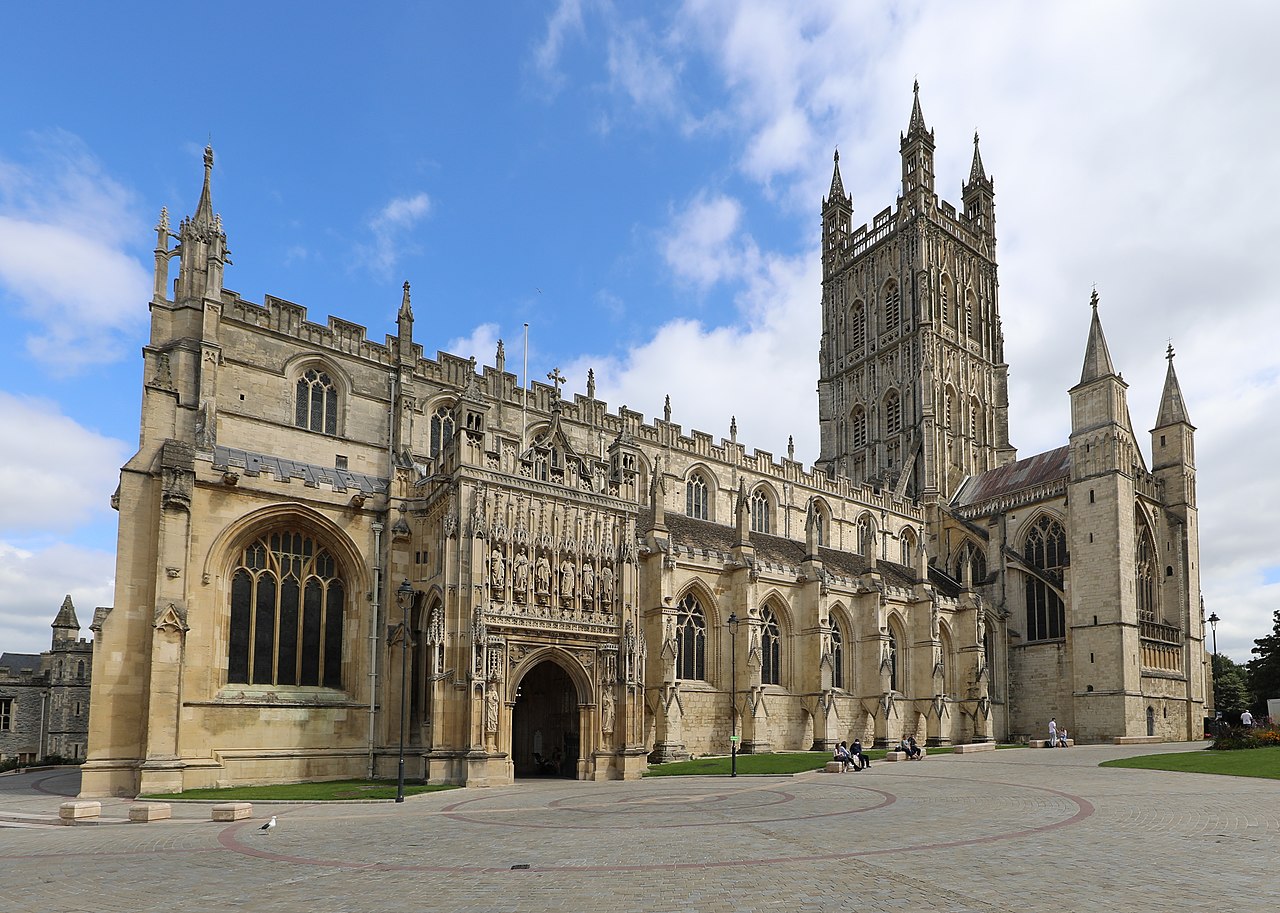
Gloucester Cathedral
Gloucester Cathedral describes more than 1,300 years of Christian worship and history, including a royal tomb. The institution continues to hold daily worship and offers training in heritage, conservation and music. Its cultural programme includes learning activities and concerts.
Editorial selectionCC BY-SA 4.0