
Le Roi du Patrimoine
Erfgoed en zijn bescherming.
Beschermde monumenten en hun status in Europa
Ontdek de collectie- 73Plaatsen in de collectie
Hautefort, Dordogne — Jebulon · Wikimedia Commons · CC0
De collectie
Le Roi du Patrimoine
Erfgoed dat geen kasteel, tuin, dorp of domein is: abdijen, bruggen, molens, vuurtorens.

Cathedral of St. Peter and Paul, Brno
Brno's church of Saint Peter and Saint Paul became a cathedral when the bishopric was established in 1777. Its neo-Gothic altar was installed in 1891. New towers were built between 1904 and 1908 to a design by August Kirstein, giving the cathedral its neo-Gothic appearance.
Editorial selectionCC BY-SA 3.0

Cathédrale de Bourges
Bourges · Centre-Val de Loire
Saint-Étienne Cathedral stands in Bourges, in the Cher department of Centre-Val de Loire. Built from the late twelfth to late thirteenth centuries, it has a five-aisled plan with chapels around the choir. Double flying buttresses help support the high central space and admit light through the surrounding walls. UNESCO highlights the proportions, the coherence of the interior and the quality of its sculpture and stained glass. The central west doorway carries a Last Judgement; other sculpted entrances and later windows show that decoration continued across successive centuries. The cathedral entered the World Heritage List in 1992. Its significance concerns the building as a whole, including structure, light and decoration, rather than a single object within it.
Editorial selectionCC BY-SA 3.0

Cathédrale de Chartres
Chartres · Centre-Val de Loire
Notre-Dame Cathedral rises above Chartres in Eure-et-Loir. Its west façade retains important twelfth-century elements, including the Royal Portal and early stained glass. Following the fire of 1194, the nave and choir were rebuilt in an architectural campaign influential across thirteenth-century Europe. Sculptured portals at the transepts extend the programme of figures and narratives around the building. UNESCO recognises the close relationship between architecture, monumental sculpture and surviving glass, alongside the cathedral’s long role as a pilgrimage destination. Chartres was inscribed on the World Heritage List in 1979. It remains a religious building within an inhabited town; the historic monument and the contemporary life around it belong to the same setting.
Editorial selectionCC BY-SA 3.0

Cefalù Cathedral
Cefalù Cathedral stands in the upper part of the Sicilian town below its rock. The Diocese of Cefalù dates the start of construction to 1131 under Roger II. Its institutional guide describes the two towers framing the façade and a portico constructed in stages during the fifteenth century. The cathedral was consecrated in 1267.
Editorial selectionCC BY-SA 3.0

Citadel of Besançon
Above the Doubs loop, Besançon’s citadel combines a military position with a cultural destination. Its development crossed changes of sovereignty: a French project in 1668 was followed by construction under Spanish authority, before Vauban remodelled the stronghold after the French reconquest in 1674. The wider fortified city includes other works, which should not be treated as alternative names for this citadel. Acquired by the city in 1959, the monument now accommodates the Musée Comtois, the Muséum and the Museum of the Resistance and Deportation. Besançon participates in the serial Fortifications of Vauban inscription of 2008. This network context does not make the entire city or every later fort part of a single monument. The map point uses the visitor address published by the citadel and located in France’s national address database.
Editorial selectionCC BY-SA 4.0

Cité de Carcassonne
Carcassonne · Occitanie
The fortified Cité occupies a rocky height above the Aude in Occitanie, on an historic route between the Atlantic and Mediterranean. Its defensive history predates the Middle Ages, and parts of the inner enclosure follow visible Roman fortifications. The principal medieval system developed in the thirteenth century, with two circuits of walls, towers, gates and spaces between the enclosures. The count’s castle stands on the western side, while the town also contains the basilica of Saints Nazaire and Celse. Eugène Viollet-le-Duc directed a major restoration campaign between 1853 and 1879. UNESCO’s recognition explicitly includes the importance of this work to the development of conservation practice. The fortified city was inscribed in 1997. Its present appearance therefore records both medieval construction and later decisions about restoration.
Editorial selectionCC BY-SA 4.0

Cité épiscopale d'Albi
Albi · Occitanie
Albi’s episcopal city developed beside the Tarn in what is now Occitanie. Local fired brick gives its streets and monuments a strong visual coherence. Sainte-Cécile Cathedral and the fortified episcopal palace embody the authority of the bishops after the suppression of Catharism in the thirteenth century. The cathedral adapts Gothic architecture to southern France; painted decoration, choir furnishings and late Gothic sculpture were added during later campaigns. The heritage property is an urban ensemble, with the relationship between its monuments and surrounding settlement central to its significance. UNESCO inscribed the Episcopal City of Albi in 2010. The designation applies to the defined historic ensemble, rather than serving as a general label for every building in the modern municipality.
Editorial selectionCC BY-SA 4.0

Convento do Desagravo do Santíssimo Sacramento
The former Convento do Desagravo do Santíssimo Sacramento stands in Vila Pouca da Beira, Portugal. It was founded in the second half of the eighteenth century and is protected as a monument of public interest. The complex has since been adapted for hotel use.
Editorial selectionCC BY-SA 2.0

Domkirche St. Marien
Hamburg’s present St. Marien Cathedral, in the St. Georg district, was consecrated as St. Marien Church on 28 June 1893. In 2018 the metropolitan chapter commissioned an exhibition about the church’s history and earlier background for its 125th consecration anniversary.
Editorial selectionCC BY-SA 3.0

Dresden Cathedral
Dresden's former Catholic Court Church was built by Gaetano Chiaveri between 1739 and 1751 in the Roman late Baroque style. It was severely damaged in the air raid of 13 February 1945. The main nave returned to use in 1962, and the church became a cathedral in 1980.
Editorial selectionCC BY-SA 3.0

Duomo of Monza
Monza's Basilica of Saint John the Baptist has an institutional history extending over fourteen centuries. Its beginnings are associated with the early organisation of the Lombard kingdom in Italy and Queen Theodelinda, a Bavarian princess of Catholic faith.
Editorial selectionCC BY-SA 4.0

Ferrara Cathedral
Ferrara’s Cathedral of Saint George has a building history associated with a papal brief of 1131. Its main altar was consecrated by Landolfo on 8 May 1177. Cardinal Ruffo reconsecrated the cathedral in 1728, and it became a metropolitan church in 1735.
Editorial selectionCC BY 2.5

Florence Cathedral
Santa Maria del Fiore is Florence’s cathedral and the episcopal church of its archbishop. Its architectural ensemble includes Giotto’s campanile and the Baptistery of Saint John, alongside Brunelleschi’s dome. The cathedral chapter maintains a library and archive containing historic manuscripts.
Editorial selectionCC BY-SA 4.0

Glasgow Cathedral
Glasgow Cathedral, also called Saint Mungo’s or the High Kirk, is an active Church of Scotland parish church. The congregation describes the building as surviving the Scottish Reformation of 1560 intact. A Friends organisation established in 1936 supports its preservation and cultural life.
Editorial selectionCC BY-SA 4.0

Glastonbury Abbey
Glastonbury Abbey’s thirty-six-acre grounds contain the setting of a medieval monastery. The institution presents associations with Joseph of Arimathea and King Arthur as legends. Its Abbey Yard was redeveloped in 2024 through the Glastonbury Town Deal.
Editorial selectionCC BY-SA 4.0
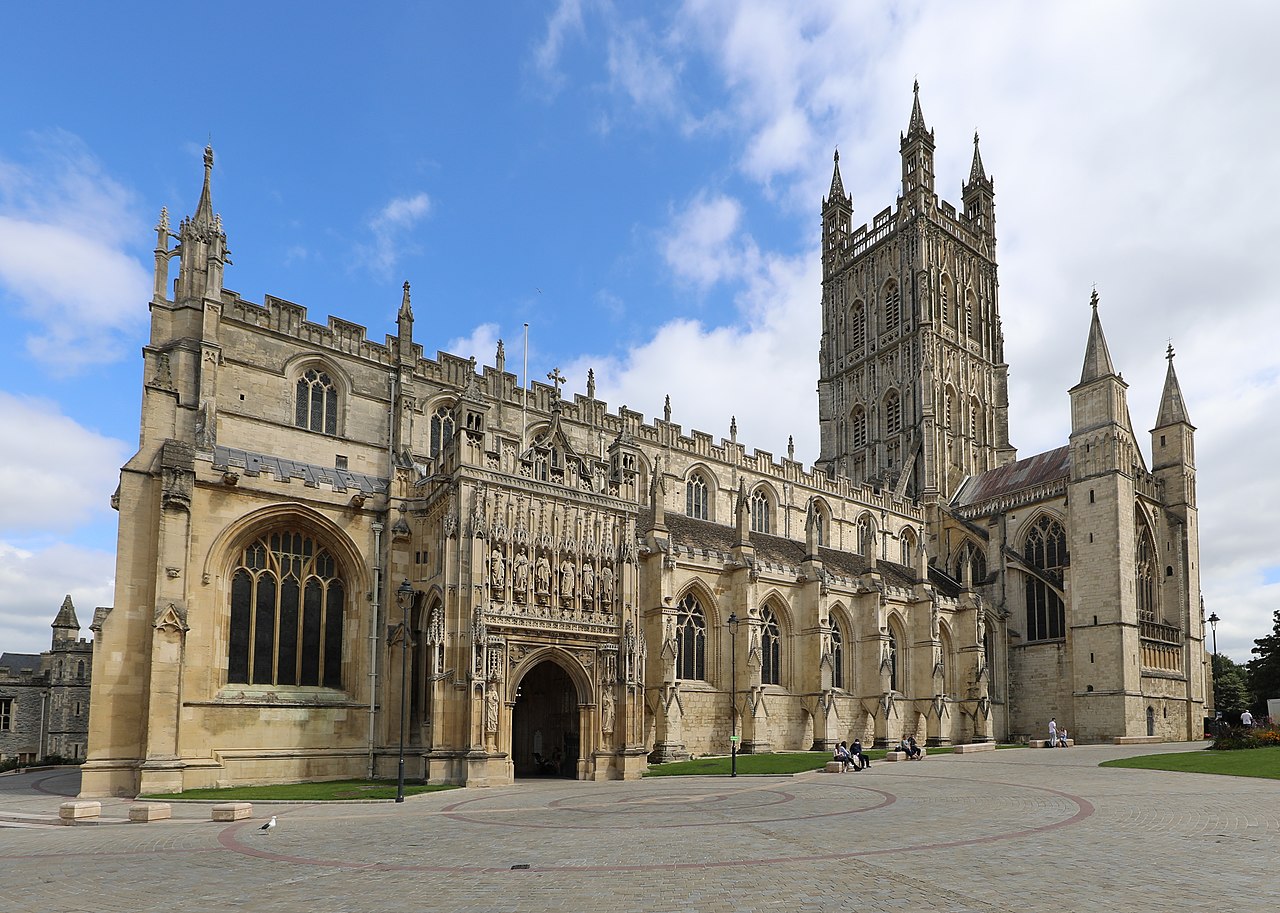
Gloucester Cathedral
Gloucester Cathedral describes more than 1,300 years of Christian worship and history, including a royal tomb. The institution continues to hold daily worship and offers training in heritage, conservation and music. Its cultural programme includes learning activities and concerts.
Editorial selectionCC BY-SA 4.0

Heiligenkreuz Abbey
Heiligenkreuz is an active Cistercian abbey in the Vienna Woods, Austria. Its own history dates its foundation by Leopold III of Babenberg to 1133. The abbey identifies a surviving Romanesque nave and façade, a church consecration in 1187, a Gothic hall choir consecrated in 1295, and a cloister built in 1220–1240.
Editorial selectionCC BY-SA 4.0

Hereford Cathedral
Hereford Cathedral houses the Mappa Mundi and the Chained Library. Its community describes a continuous history of worship and shared work extending for more than 1,300 years. The institution combines its Christian religious role with the presentation of these collections.
Editorial selectionCC BY-SA 3.0

Lausanne Cathedral
Lausanne Cathedral's construction began from 1170 and continued into the first half of the thirteenth century. A Romanesque apse preceded the building's Gothic development. Its painted south portal was added around 1225–1235; Pope Gregory X consecrated the cathedral on 20 October 1275.
Editorial selectionCC BY-SA 2.0

Maribor Cathedral
Maribor’s cathedral and parish church is dedicated to Saint John the Baptist. Its parish originated in the first half of the twelfth century. Repeated alterations included changes associated with the transfer of the episcopal seat to Maribor in 1859. Bishop Anton Martin Slomšek is buried there.
Editorial selectionCC0

Monastery of Pedralbes
Queen Elisenda de Montcada founded Pedralbes Monastery in 1327 with the support of her husband, King James II. The complex was built on three levels using the sloping terrain: the dormitory above, the church at the middle level and vegetable gardens below.
Editorial selectionCC BY-SA 4.0

Monreale Cathedral
Monreale's cathedral belongs to a monumental complex commissioned in the twelfth century by the Norman king William II. The commission brought together a basilica, a convent with its cloister and a royal palace. The cathedral is known for the richness of its interior mosaics.
Editorial selectionCC BY-SA 4.0

Mosteiro da Batalha
Batalha
The Dominican monastery at Batalha in central Portugal commemorates João I’s victory over Castile at Aljubarrota in 1385. Much of the ensemble developed during his reign, including the church, cloister, chapter house and Founder’s Chapel. The latter contains the joint tomb of João I and Philippa of Lancaster, with burials of their sons around it. Successive campaigns introduced different architectural forms, bringing Gothic construction into dialogue with the elaborate carving associated with the Manueline style. The Unfinished Chapels preserve a further royal funerary project that was never completed. UNESCO inscribed the Monastery of Batalha in 1983. It is a religious and dynastic monument whose building history extends across generations, not a structure attributable to one designer or one uninterrupted campaign.
Editorial selectionCC BY-SA 3.0

New Cathedral, Linz
The Mariendom in Linz contains a group of painted windows in its nave and transept, together with three rose windows, created between 1910 and 1924. Their imagery includes religious subjects, Upper Austrian people and landscapes, and the history of the cathedral’s construction.
Editorial selectionCC BY-SA 3.0